
Short Answer Hook:
Traditionally, the bride (or her family) paid for the vast majority of the wedding expenses, including the bride’s attire, all stationery, the ceremony and reception fees, flowers, and photography. However, in modern weddings, these financial rules are almost always broken! Today, the costs are more commonly split based on mutual agreement, financial ability, and what the couple decides to cover themselves, with the bride often personally purchasing her wedding dress, accessories, and the groom’s wedding band.
Planning a wedding brings up countless questions, but one of the most pressing is: who pays for what? If you’re a bride-to-be navigating wedding finances, you’ve likely discovered that the traditional rules your grandmother followed don’t always apply today. Understanding what the bride typically pays for—and how modern couples are rewriting these rules—can help you plan a budget that works for your unique situation.
This comprehensive guide breaks down traditional expectations, modern approaches, and practical strategies for splitting wedding costs fairly among all parties involved.


The Evolution of Wedding Financial Responsibilities
Wedding finance traditions have transformed dramatically over the past few decades. What was once a rigid set of rules has evolved into flexible guidelines that couples adapt to their circumstances.
Traditional Etiquette: The Bride’s Family Pays
Historically, wedding finances fell heavily on the bride’s family, a practice rooted in the ancient custom of providing a dowry. Under traditional etiquette established in the early 20th century, the bride’s parents were expected to cover nearly all wedding expenses, including:
- The entire wedding ceremony and reception
- Wedding invitations and stationery
- The bride’s dress and trousseau
- Flowers and decorations
- Photography and videography
- Music and entertainment
- Transportation for the wedding party
Meanwhile, the groom’s family traditionally paid for the rehearsal dinner, the bride’s bouquet and going-away corsage, boutonnieres for groomsmen, and the honeymoon.
The groom himself was responsible for the marriage license, officiant fees, and the bride’s wedding rings.
This division made sense in an era when women rarely worked outside the home and marriages represented a transfer of financial responsibility from father to husband. The bride’s family was essentially hosting an elaborate event to celebrate their daughter’s transition to married life.
| Category | Specific Items Usually Covered |
| Attire & Beauty | The bride’s wedding dress, veil, shoes, and all accessories.The bridesmaids’ dresses and accessories (though they often pay now).All professional hair and makeup for the bride and her attendants. |
| Ceremony & Reception | The majority of the wedding costs, including the venue hire, catering, and non-alcoholic beverages.Ceremony fees (church or officiant). |
| Logistics & Details | Wedding planner or coordinator fees.All wedding stationery (save-the-dates, invitations, programs, menus).Photography and videography.The wedding cake. |
| Gifts | The groom’s wedding band/ring.Gifts for the bridal party. |
| Pre-Wedding Events | The engagement party. |
Why Traditional Rules No Longer Apply
Several societal shifts have made these traditional arrangements outdated:
Financial Independence: Most modern brides are financially independent, with established careers and personal savings. Many couples live together before marriage and already share expenses.
Later Marriage Ages: The average age of first marriage has increased significantly. Couples marrying in their late twenties or thirties are more likely to be financially established and less dependent on parental support.
Diverse Family Structures: Divorce, remarriage, and non-traditional families make the old “bride’s parents pay” model impractical for many couples.
Rising Wedding Costs: With average wedding costs exceeding $30,000 in many regions, expecting one family to shoulder the entire burden is increasingly unrealistic.
Equality Values: Modern couples prioritize partnership and equality, extending these values to wedding planning and finances.
What the Bride Typically Pays For Today
In contemporary weddings, the bride’s financial responsibilities vary widely based on her circumstances, but certain expenses remain commonly associated with the bride herself rather than her family.
The Groom’s Wedding Band
This remains one of the most consistent traditional expenses the bride covers. Just as the groom typically purchases the bride’s engagement ring and wedding band, the bride reciprocates by buying the groom’s wedding band.
Average Cost: Wedding bands for men typically range from $500 to $2,000, though prices vary significantly based on metal choice, design complexity, and brand.
Modern Variations: Some couples shop for wedding bands together and split the cost, while others maintain the traditional exchange where each partner surprises the other.



Wedding Gifts for the Wedding Party and Family
The bride traditionally purchases thoughtful gifts for several key people:
Bridesmaids’ Gifts: Thank-you gifts for bridesmaids typically cost $50-150 per person. Popular options include personalized jewelry, monogrammed robes, spa gift certificates, or custom items they can use on the wedding day.
Parents’ Gifts: Many brides give gifts to both sets of parents as a token of appreciation, especially if they’ve contributed financially or significantly to planning. These often range from $100-300 per couple.
Groom’s Gift: A personal gift for the groom, traditionally exchanged the morning of the wedding. This is often something sentimental rather than expensive—perhaps a watch, cufflinks, or a heartfelt letter.
Maid of Honor Gift: Some brides give an additional or upgraded gift to the maid of honor in recognition of their extra responsibilities.
Continue to read: Bridesmaids and Groomsmen Gift Ideas for Your Bridal Party in 2026
Personal Attire and Beauty Services
While families may contribute, many financially independent brides personally cover their wedding day appearance costs:
Wedding Dress: The single largest personal expense, typically ranging from $1,500 to $3,000 for the dress alone, though prices can range from a few hundred to tens of thousands of dollars. If you are planning a budget wedding, you can also found dream wedding dress at price under $200
Alterations: Professional alterations usually add $200-600 to the dress cost, depending on the complexity of changes needed.
Accessories: Shoes ($100-300), veil ($100-400), jewelry ($100-500+), and undergarments ($50-150) add up quickly.
Hair and Makeup: Professional wedding day beauty services typically cost $200-500 for the bride, not including trials, which are an additional $100-200.
Pre-Wedding Beauty: Many brides invest in skincare treatments, teeth whitening, spray tans, manicures, and pedicures in the weeks leading up to the wedding, adding another $300-800 to the total.
Bridesmaids’ Bouquets and Accessories
In some arrangements, the bride covers the cost of bridesmaids’ bouquets (typically $50-100 each) and may also purchase matching accessories like jewelry or hair pieces for the bridesmaids to wear during the ceremony.
The Couple’s Shared Expenses
Most modern brides don’t pay for wedding expenses solo—they split major costs with their partner. Together, the couple often funds or significantly contributes to:
Venue and Catering: Usually the largest wedding expense, averaging $10,000-15,000 or more, representing roughly 45-50% of the total wedding budget.
Photography and Videography: Professional documentation typically costs $3,000-6,000, though many couples consider this a priority worth the investment.
Music and Entertainment: DJ or band services range from $1,500-4,000 depending on the region and duration of coverage.
Wedding Invitations and Paper Goods: Custom stationery, save-the-dates, programs, menus, and thank-you cards can total $500-1,500. Happyinvitation.com is your unique wedding invitation stationery shopping station. You can find traditionally paper wedding card start at price $1, modern acrylic wedding invites with free custom made service.



Wedding Planner: If hired, coordinators range from $1,500 for day-of coordination to $5,000+ for full-service planning.
Honeymoon: Many couples prioritize funding their honeymoon together, with costs varying wildly from $3,000 for domestic trips to $10,000+ for international destinations.
Rings: Some modern couples shop for engagement and wedding rings together and split the costs rather than following the tradition of the groom buying the engagement ring.
Modern Wedding Budget Split Models
Today’s couples have moved away from rigid traditions toward flexible arrangements that reflect their unique situations. Here are the most common approaches:
| Split Type | Description |
| Couple-Funded | The bride and groom pay for the entire wedding themselves. |
| Three-Way Split | The couple pays one-third, the bride’s family pays one-third, and the groom’s family pays one-third. |
| Contribution-Based | Each family contributes an amount they are comfortable with, and the couple covers the rest. |
| Itemised Split | Each party pays for a specific item (e.g., Bride’s family pays for the venue; Groom’s family pays for catering). |
Model 1: The Couple Pays for Everything
When This Works: Both partners are financially established, want complete creative control, or prefer not to accept financial help from families.
Typical Scenario: Professional couples in their thirties who’ve been financially independent for years often prefer this model. It eliminates obligation and allows complete freedom in decision-making.
Advantages:
- Complete autonomy over all wedding decisions
- No feeling of obligation to families
- Simplified planning without needing approval from contributors
- Pride in self-funding a major life milestone
Considerations:
- Requires substantial savings or careful budgeting
- May mean scaling back on certain elements
- Less opportunity for families to feel involved through contribution
Model 2: Proportional Split Based on Income
When This Works: The couple contributes the majority, with families adding what they’re comfortable giving based on their financial ability.
Typical Scenario: The couple covers 50-70% of costs, with both sets of parents contributing the remainder based on what they can afford, without expectation of equal amounts.
Advantages:
- Fair to all parties involved
- Allows families to participate meaningfully
- Reduces financial burden on the couple
- No one overextends themselves financially
Considerations:
- Requires open, honest conversations about finances
- May involve navigating different family financial situations
- Decision-making protocol needs clear establishment
Model 3: Traditional with Flexibility
When This Works: Families want to honor traditions but adapt them to modern realities.
Typical Scenario: The bride’s family covers ceremony and reception venue/catering, the groom’s family handles rehearsal dinner and bar service, and the couple pays for honeymoon, photography, and their personal items.
Advantages:
- Honors family traditions
- Clear delineation of responsibilities
- Spreads costs across multiple parties
- Allows each family a meaningful role
Considerations:
- Requires all parties to agree on the arrangement
- Can feel outdated to some couples
- May not work if one family has significantly more resources
Model 4: Category Assignment
When This Works: Multiple parties want to contribute but prefer clear ownership of specific budget categories.
Typical Scenario: One family takes full responsibility for the venue, another handles all catering, while the couple covers photography, music, and decor.
Advantages:
- Very clear who’s responsible for what
- Allows contributors to have control over their assigned areas
- Prevents overlap or confusion
- Can match assignments to personal interests or expertise
Considerations:
- Requires detailed coordination
- Quality expectations must be clearly communicated
- One category might cost significantly more than others
Model 5: The Pooled Budget Approach
When This Works: All contributing parties want equal say and are comfortable with collaborative decision-making.
Typical Scenario: The couple and both sets of parents each contribute a set amount to one combined budget, then make joint decisions about how to allocate those funds.
Advantages:
- Democratic decision-making process
- Truly collaborative celebration
- Can achieve more with combined resources
- Families feel equally valued and heard
Considerations:
- Requires excellent communication among all parties
- Decision-making can be slower with more stakeholders
- Potential for disagreements about priorities
- Works best when all contributors have similar values and vision
How to Have the Money Conversation
Discussing wedding finances can feel awkward, but approaching these conversations thoughtfully sets the foundation for smooth planning.
Timing Is Everything
Have initial budget conversations as soon as you’re engaged, ideally within the first month. This allows you to set realistic expectations before falling in love with venues or vendors you might not be able to afford.
The First Conversation: Start with just the two of you. Discuss your combined financial picture, how much you can realistically contribute, your priorities for the celebration, and whether you want or need family contributions.
Approaching Parents: If you’re open to contributions, approach each set of parents separately. This allows them to speak freely about their financial situation without comparison pressure.
Setting the Stage
Be Gracious and Clear: “We’re so excited to plan our wedding and wanted to talk with you about the budget. We’re planning to contribute [amount/percentage], and we wanted to see if you’d like to contribute as well. We understand completely if that’s not possible.”
Don’t Assume: Never assume anyone will contribute. Even if tradition dictates or they contributed to a sibling’s wedding, each situation is unique.
Establish Decision Rights: Clarify upfront that financial contribution doesn’t automatically equal decision-making power. For example: “We’re so grateful for your generous contribution toward the venue. We’d love to show you our top three choices and hear your thoughts, but want to be clear that we’ll be making the final decision.”
Creating a Written Agreement
While it might feel formal, documenting financial arrangements prevents misunderstandings:
What to Include:
- Specific contribution amounts from each party
- What those contributions will be used for
- Payment timeline (upfront, reimbursement, or direct payment to vendors)
- Decision-making authority for expenses each party is funding
- What happens if costs exceed initial estimates
Keep It Simple: This doesn’t need to be a legal contract—a shared document or email confirming the agreement works perfectly well.
Navigating Tricky Situations
When Contributions Come with Strings: If a family member’s contribution comes with expectations that don’t align with your vision, you have options. You can compromise on specific elements, politely decline the contribution, or find middle ground that respects both parties.
When One Family Can’t Contribute: Handle this with sensitivity. Never make comparisons, and ensure both families feel equally valued regardless of financial input. Non-financial contributions (planning help, DIY projects, day-of coordination) are equally valuable.
When Contributions Are Unequal: If one family contributes significantly more, be intentional about ensuring the other family doesn’t feel less important. Recognition, involvement in planning, and special roles in the ceremony can balance financial disparities.
What the Groom Typically Pays For Today
Understanding the groom’s traditional and modern financial responsibilities provides helpful context for couple discussions.
Traditional Groom’s Expenses
- Marriage license and officiant fees
- Bride’s engagement ring and wedding band
- Boutonnieres for groomsmen and fathers
- Bouquet and going-away corsage for the bride
- Gifts for groomsmen and best man
- Honeymoon
- Rehearsal dinner (though often his parents cover this)
Modern Reality
Today’s grooms often split most expenses with their bride or contribute proportionally based on income. Many couples view the engagement ring as the groom’s primary traditional responsibility, with everything else being joint decisions and joint expenses.
The rehearsal dinner has largely shifted to being hosted by the groom’s parents, though some couples choose to host it themselves or have both families split the cost.
Breaking Down Average Wedding Costs
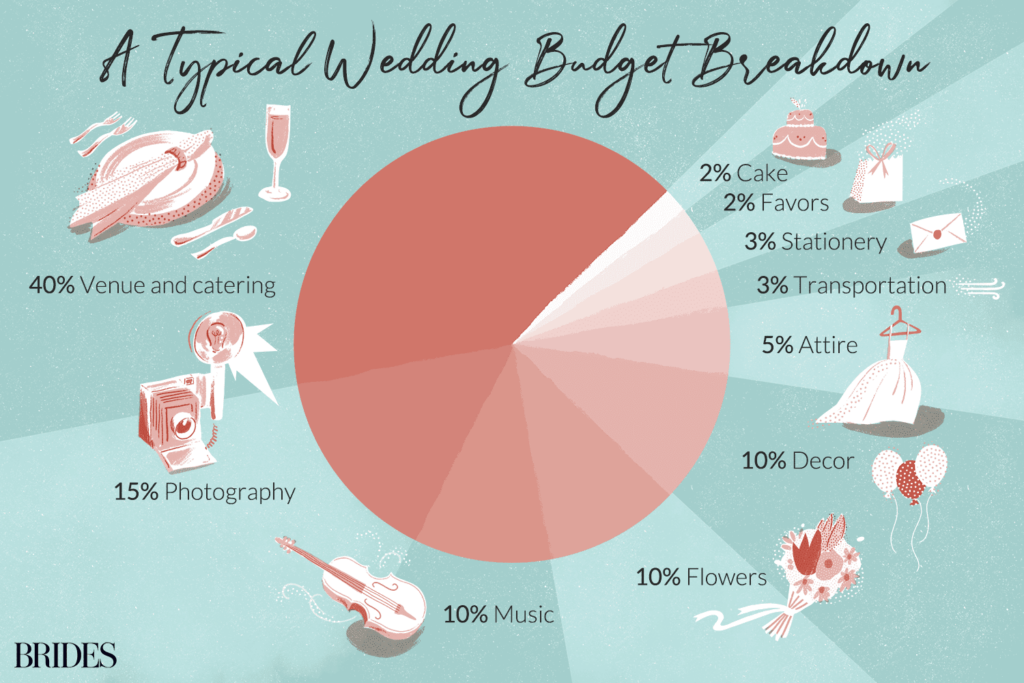
Understanding typical wedding expense distributions helps in planning your budget conversations.
The Typical Wedding Budget Breakdown
Based on industry averages for a $30,000 wedding:
Reception Venue & Catering (48%): $14,400
- Venue rental, food, beverages, service staff, and rentals
Photography & Videography (12%): $3,600
- Professional photographer, videographer, prints, and albums
Music & Entertainment (10%): $3,000
- Ceremony musicians, DJ or band for reception
Flowers & Decorations (8%): $2,400
- Bouquets, centerpieces, ceremony arrangements, and additional decor
Wedding Attire (6%): $1,800
- Bride’s dress and accessories, groom’s attire, alterations
Invitations & Stationery (2%): $600
- Save-the-dates, invitations, programs, menus, thank-you cards
Wedding Rings (3%): $900
- Both wedding bands combined
Miscellaneous (11%): $3,300
- Transportation, favors, gifts, beauty services, tips, unexpected costs
These percentages shift based on priorities. Some couples allocate 20% to photography because documentation matters most to them, while others invest heavily in entertainment or an exceptional venue.
Money-Saving Strategies Without Sacrificing Style
Regardless of who’s paying, most couples want to maximize their budget.
Smart Budget Stretchers
Off-Peak Timing: Saturday evenings in June command premium pricing. Friday evenings, Sunday afternoons, or weekday weddings can save 20-40% on venue and vendor costs.
Seasonal Flexibility: Flowers and certain foods cost significantly less when they’re in season. A spring wedding featuring peonies and asparagus costs less than one demanding these same elements in November.
Guest List Discipline: Every additional guest costs approximately $100-200 in catering, rentals, and favors. A 150-person wedding costs $10,000-15,000 more than a 100-person celebration. (Check out our guide: How to Select Your Wedding Guest List?)
Cocktail Reception: Afternoon cocktail receptions with heavy appetizers often cost 30% less than full seated dinners while feeling elegant and festive.
DIY Strategically: Handle genuinely simple tasks yourself (creating a playlist, assembling simple centerpieces), but leave complex or time-sensitive tasks to professionals. (Check our guide: How to Make Wedding Invitations: DIY Guide & Save $500+)
Prioritize Ruthlessly: Identify your top three priorities and allocate disproportionate budget there, then scale back significantly on elements that matter less to you.
What’s Worth the Splurge
Based on couple surveys, these investments rarely feel regrettable:
Professional Photography: You’ll have these images forever, while the flowers wilt and the cake gets eaten.
Great Food: Guests remember excellent food and definitely remember poor food.
Comfortable Venue: A climate-controlled space with adequate seating and good flow makes everyone happier.
Live Music: If it fits your budget, live musicians create an atmosphere recorded music can’t quite match.
Your Dress: If you’ve dreamed of a specific look, investing in a dress that makes you feel incredible is worth it.
Regional and Cultural Variations
Wedding financial customs vary significantly across cultures and regions, affecting who pays for what.
Cultural Considerations
- Asian Traditions: In many Asian cultures, both families contribute significantly, often giving monetary gifts that help cover costs. Red envelope traditions in Chinese weddings, for example, mean guests contribute financially.
- Latin American Traditions: The “padrinos” or “madrinas” system involves family friends or relatives sponsoring specific wedding elements—one might cover the cake, another the music, and another the flowers.
- Middle Eastern Traditions: Families often contribute elaborate gifts and may cover specific traditional elements while the couple handles others.
- Jewish Traditions: Both families typically contribute substantially, with costs often split relatively evenly between the couple and both sets of parents.
Regional Cost Differences
Wedding costs in Manhattan differ dramatically from those in rural Oklahoma. A $30,000 budget creates different celebrations depending on location:
- High-Cost Metropolitan Areas: Major cities like New York, San Francisco, or Los Angeles see average weddings costing $50,000-70,000+, with venues alone commanding $15,000-25,000.
- Mid-Range Markets: Secondary cities and suburbs typically see average costs of $25,000-35,000 with reasonable vendor availability and pricing.
- Lower-Cost Rural Areas: Rural communities and small towns often celebrate beautifully for $15,000-25,000, with local vendors offering competitive pricing and more intimate venues.
Consider your region when setting budgets and expectations, as what one family considers “normal” spending might seem extravagant or modest to another based on their local market.
The Destination Wedding Factor
Destination weddings completely change the financial equation and who pays for what.
Who Pays for Travel?
Traditional View: Guests cover their own travel and accommodation for destination weddings, which is why guest lists for these celebrations tend to be much smaller.
Modern Generosity: Some couples, particularly those asking guests to travel for a wedding that could have been local, contribute toward accommodations by booking room blocks with discounts or covering one or two nights for close family.
The Couple’s Additional Costs
Destination weddings often mean the couple covers:
- Site visit travel expenses before the wedding
- Wedding planner fees (nearly essential for destination events)
- Welcome bags or gifts for traveling guests
- Group activities or excursions
- Extended accommodation for themselves for planning and relaxation
When Families Offer to Host
If parents offer to turn a destination wedding into a family vacation and cover accommodations for extended family, establish clear parameters: are they covering immediate family only, or extended relatives too? For how many nights? This prevents uncomfortable surprises.
Check out our guide to: Planning Your Dream Destination Wedding
Frequently Asked Questions
Does the bride still pay for the groom’s ring if we’re splitting everything else?
There’s no single right answer. Some couples maintain this tradition even when splitting other costs because they enjoy the symbolic exchange. Others include both wedding bands in their shared budget. Discuss what feels right for your relationship—perhaps you exchange rings as gifts to each other, or maybe you shop together and split the cost. Neither approach is wrong.
What if my parents want to contribute but I prefer to pay for everything ourselves?
This requires diplomatic handling. Consider whether accepting their contribution might be more about allowing them to feel involved than about the money itself. You might accept a contribution and designate it for something specific they’d enjoy, like your honeymoon or the bar service. If you truly prefer complete independence, explain kindly: “We’re so grateful for the offer, but we’ve been saving for this and want to fund it ourselves. Your presence and support mean more to us than financial help.”
Should I feel obligated to include my parents in decisions if they’re paying?
This depends on your agreement. If they’re contributing to your overall budget with no strings attached, you retain decision-making authority. However, if they’re funding specific elements, courtesy dictates involving them in decisions about those elements. The key is establishing these expectations upfront. Most parents appreciate being consulted even when they’ve given you final say.
How do we handle it when one set of parents can contribute significantly more than the other?
Handle this with grace and sensitivity. Never compare contributions or make the family contributing less feel inadequate. Consider having the family contributing more cover larger budget items while the other family handles smaller specific elements, giving both equal recognition. Emphasize that non-financial contributions—planning help, emotional support, or hosting pre-wedding events—are equally valuable.
What expenses should the bride never have to pay for?
There are no absolute rules, but most etiquette experts agree the bride shouldn’t be expected to pay for bridesmaids’ dresses and accessories (though she may choose to as a gift), guests’ travel expenses, or vendor tips and overtime fees that are the host’s responsibility. Beyond that, expenses should be allocated based on agreement among contributing parties rather than strict traditional rules.
Is it tacky to ask guests to contribute toward the wedding instead of giving traditional gifts?
Crowdfunding platforms for weddings have become more accepted, particularly for couples who are already established and don’t need household items. However, approach this carefully. Some guests, especially older generations, may view it as inappropriate. If you go this route, use a dedicated wedding crowdfunding site, never put the information directly on the invitation, and be prepared for some guests to decline. Consider positioning it as a honeymoon fund rather than asking guests to “pay for the wedding.”
Should we pay for our wedding party’s attire?
Traditionally, the couple covers groomsmen’s suit rentals if they’re requiring specific attire, while bridesmaids pay for their own dresses. Modern practice varies widely. If you’re requiring expensive specific attire or your wedding party members are on tight budgets, covering these costs is generous and appreciated. Many couples compromise by paying for accessories, alterations, or hair and makeup. At minimum, choose reasonably priced options if asking your wedding party to pay.
How much should parents contribute if they want to help?
There’s no standard amount, as this depends entirely on their financial situation and your wedding budget. Some parents can comfortably contribute $10,000-20,000 or more, while others might offer $1,000-2,000, and both amounts are meaningful. The contribution should never strain their finances. Have an honest conversation: “We’d never expect you to contribute more than is comfortable. We’d be grateful for any amount you feel good about giving, or even no financial contribution at all.”
What if my fiancé and I have very different incomes? How should we split costs?
Many couples with income disparities split expenses proportionally rather than 50/50. For example, if one partner earns $80,000 and the other earns $40,000, you might split costs 67/33 rather than evenly. Other couples maintain completely separate finances and split everything equally regardless of income. Choose what feels fair and sustainable for your relationship, and remember this is practice for managing finances throughout your marriage.
Do we need to give our parents a gift if they paid for the wedding?
A thoughtful thank-you gift is always appropriate when parents contribute significantly, though it doesn’t need to be expensive. Many couples give sentimental gifts—framed photos from the wedding, photo albums, or heartfelt thank-you letters. The gesture and acknowledgment matter more than the price tag. Public recognition during speeches and in your thank-you cards is equally important.
Your Action Plan: Navigating Wedding Finances Successfully
Planning who pays for what doesn’t have to be stressful when you approach it systematically.
90 Days Before Engagement Announcement
- Have the private conversation: Discuss your combined financial picture, what you can afford to contribute, and whether you want family help
- Research typical costs: Understand what weddings cost in your region for your estimated guest count
- Establish your priorities: Identify what matters most to both of you
Within One Month of Getting Engaged
- Approach families: Have separate, no-pressure conversations with each set of parents about potential contributions
- Create your initial budget: Based on your contributions plus any offers from family
- Document the agreement: Put your financial arrangement in writing, even informally
6-9 Months Before the Wedding
- Book major vendors: Secure venue, catering, photography—the big-ticket items that require deposits
- Track expenses meticulously: Use a spreadsheet or wedding budget app to monitor spending against your plan
- Communicate regularly: Keep all contributing parties updated on how funds are being used
3-6 Months Before the Wedding
- Finalize smaller vendor contracts: Book DJ, florist, hair and makeup, transportation
- Purchase personal items: Wedding attire, rings, gifts for the wedding party
- Address overages: If you’re exceeding budget, determine where to cut or who will cover additional costs
Final Two Months
- Confirm all payments: Ensure deposits and final payments are scheduled correctly
- Prepare tips and cash: Calculate gratuities for vendors and service staff
- Thank contributors: Write heartfelt thank-you notes to anyone who contributed financially or otherwise
Conclusion: Creating Your Own Financial Traditions
The question of what the bride pays for no longer has a single answer, and that’s actually wonderful news. Today’s couples have the freedom to create financial arrangements that work for their unique situations, values, and family dynamics.
Whether you’re funding everything yourselves, gratefully accepting family contributions, or finding a creative hybrid approach, the key is clear communication, mutual respect, and focusing on what truly matters: celebrating your commitment surrounded by people you love.
The most successful wedding finance arrangements have these elements in common: honest conversations early in the planning process, documented agreements that prevent misunderstandings, respect for each contributing party’s financial boundaries, and gratitude for all forms of support—financial and otherwise.
Your wedding should strengthen relationships, not strain them with financial stress or misunderstandings. Take the time to navigate these conversations thoughtfully, honor the traditions that resonate with you while adapting or discarding those that don’t, and remember that how you pay for your wedding matters far less than the marriage you’re celebrating.
Ready to start planning your wedding budget? Begin by having an honest conversation with your partner about your combined finances, then approach any family members who might contribute. Create a simple budget document you can share and update as planning progresses. Most importantly, stay flexible—the “perfect” arrangement is whatever works best for your specific situation.
You may also interested in:
How to Choose Right Wedding Venue?