
Why do so many couples today choose to break away from traditional multi-color wedding palettes? The answer lies in the growing appeal of elegance through simplicity. A one-color wedding, also known as a monochromatic wedding, is a cohesive celebration where a single primary color dominates the entire event—from flowers and décor to attire and catering.
This modern approach combines sophistication with clarity, creating a stunning visual narrative without the complexity of coordinating multiple shades. Whether you’re drawn to the timelessness of blush, the luxury of deep emerald, or the warmth of gold, executing a one-color wedding successfully requires thoughtful planning and creative layering.
This guide will walk you through every step of bringing your monochromatic dream to life.


The Rise of Monochromatic Weddings
Why Monochromatic Weddings Are Trending
The shift toward one-color weddings reflects broader design trends inspired by high fashion runways and luxury minimalism. Just as top designers are celebrated for their monochromatic collections, couples now recognize that restraint can be more powerful than variety. This trend gained momentum as couples sought to simplify decision-making while elevating their wedding’s visual impact.
The Appeal of Simplification
Planning a wedding involves countless choices. By committing to a single color, couples reduce decision fatigue significantly. This constraint actually sparks creativity—designers and couples become more inventive with textures, patterns, and layering to create depth and interest within the chosen palette.
Celebrity and Influencer Inspiration
High-profile weddings showcasing monochromatic themes have captured media attention and inspired countless couples. From all-white ceremonies to coordinated blush and cream affairs, celebrity couples demonstrate that one-color weddings can feel refined, modern, and deeply personal.


Choosing Your Color
Popular One-Color Wedding Choices
Several colors have emerged as favorites for monochromatic weddings.
- Blush pink conveys romance and softness, perfect for spring and summer celebrations.
- Navy blue exudes elegance and works beautifully for formal affairs.
- Emerald green brings luxury and sophistication, ideal for dramatic, moody events.
- Gold creates warmth and glamour
- Burgundy offers richness and drama for fall and winter weddings.


Consider Your Season and Venue
Your wedding’s timing and location should influence your color choice. A spring garden wedding naturally complements soft pastels, while a winter venue benefits from deeper, richer tones. Similarly, a beach setting pairs wonderfully with blues and whites, whereas an urban loft suits jewel tones.
Test Your Color in Different Lighting
Before finalizing your choice, observe how your selected color appears in natural light, artificial lighting, and candlelight. A shade that looks stunning in daylight may appear murky under dim evening lighting, or vice versa. Request samples from your florist and decorator to evaluate in your actual venue.
Consider the Emotional Tone
Colors evoke emotions. Choose a color that aligns with the atmosphere you want to create.
Soft pastels feel romantic and dreamy, deep jewel tones convey luxury and drama, and neutrals like cream and gray project timeless elegance.
Skin Tone Considerations
When selecting a color for bridesmaids’ dresses or wedding attire, consider how it complements various skin tones. Some colors are universally flattering when available in different depths and undertones, while others suit specific complexions better.


Continue to check out our guide to: How to Choose Your Wedding Colors?
Monochromatic Wedding Décor and Florals
Layering Shades for Visual Depth
Monochromatic doesn’t mean monotonous. Create visual richness by layering different shades and tints of your chosen color.
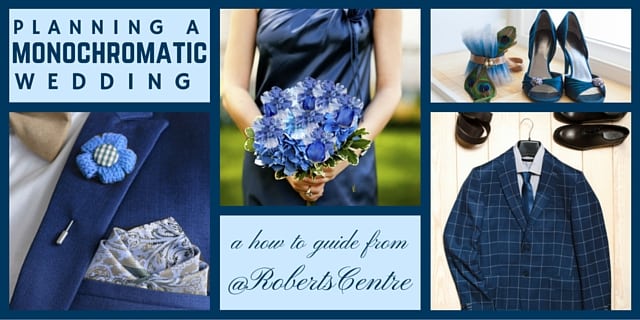
For example, pair deep jewel tones with lighter, washed versions of the same hue. Use teal, turquoise, and navy together for a blue wedding, or combine mauve, dusty rose, and hot pink for a cohesive pink celebration.
Incorporating Texture and Pattern
Introduce varied textures through velvet, silk, linen, metallics, and matte finishes.
Textured wallpapers, patterned linens, and dimensional floral arrangements add visual interest without introducing new colors. Geometric patterns, florals, and geometric designs create movement within your monochromatic scheme.
Floral Arrangements and Greenery
Florals remain the centerpiece of most weddings, even monochromatic ones.
Work with your florist to source blooms in varying shades of your color. Use abundant greenery—eucalyptus, ferns, and foliage—as natural contrast. Varied greenery tones add sophistication and prevent the arrangement from feeling flat.
Table Linens, Runners, and Centerpieces
Coordinate your linens with your color palette.
Layer textures by combining matte linens with velvet accents or metallic trim. Use centerpieces that vary in height and composition to maintain visual interest across the room.
Strategic Lighting Choices
Lighting dramatically affects how your color appears. Warm lighting enhances warm tones like gold and blush, while cool lighting complements jewel tones and blues. Consider uplighting, string lights, and candlelight as tools to showcase your chosen color.


One Color Wedding Attire and Styling
The Wedding Dress
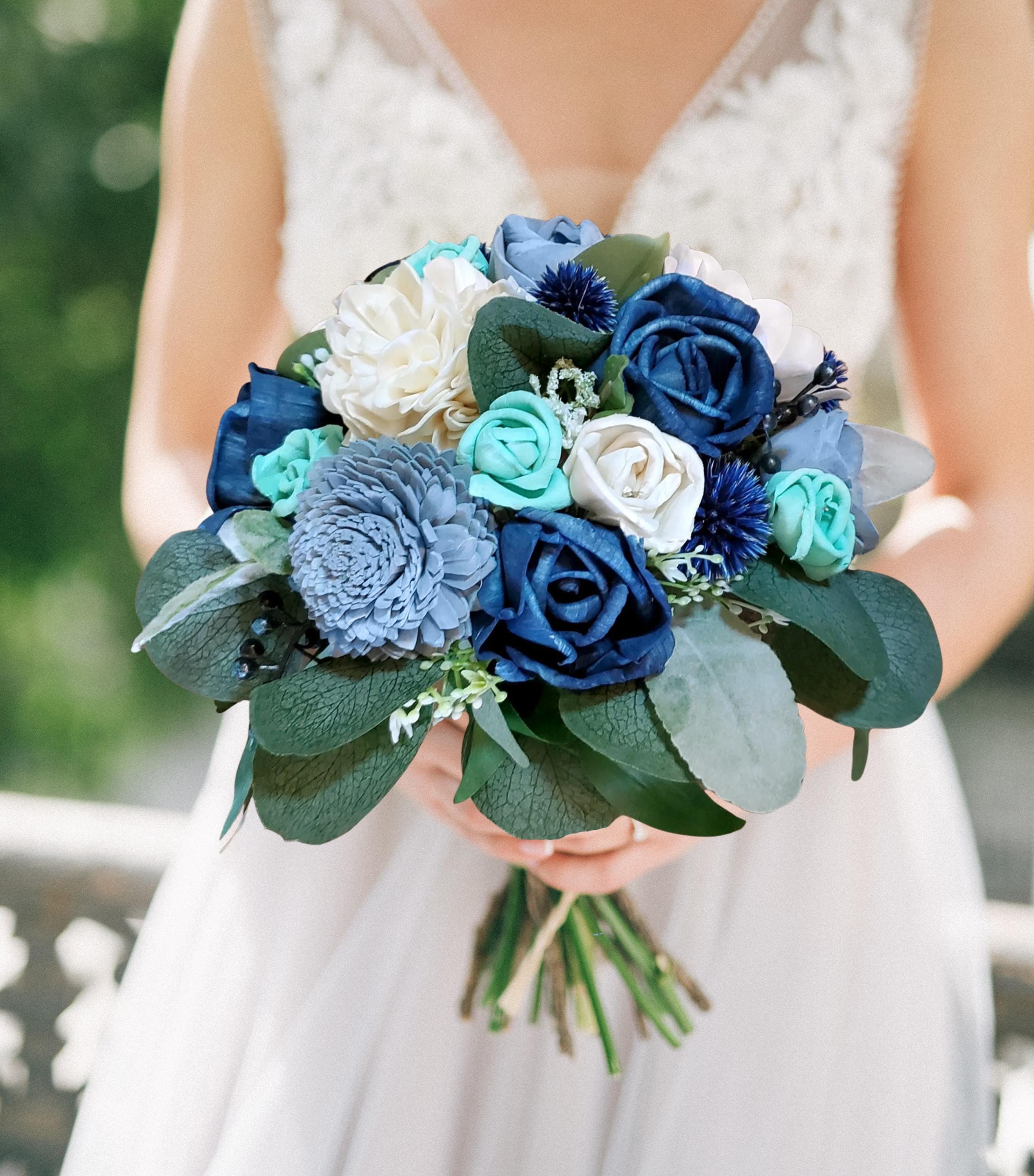
Your wedding dress doesn’t need to be pure white in a one-color wedding. Embrace your chosen color with an off-white dress adorned with subtle colored details, an ombré effect that transitions into your color, or a full statement dress. The dress can anchor or complement your overall theme.


Bridesmaids’ Dresses
Consider whether your bridesmaids will wear identical dresses in your chosen color or variations in different shades.
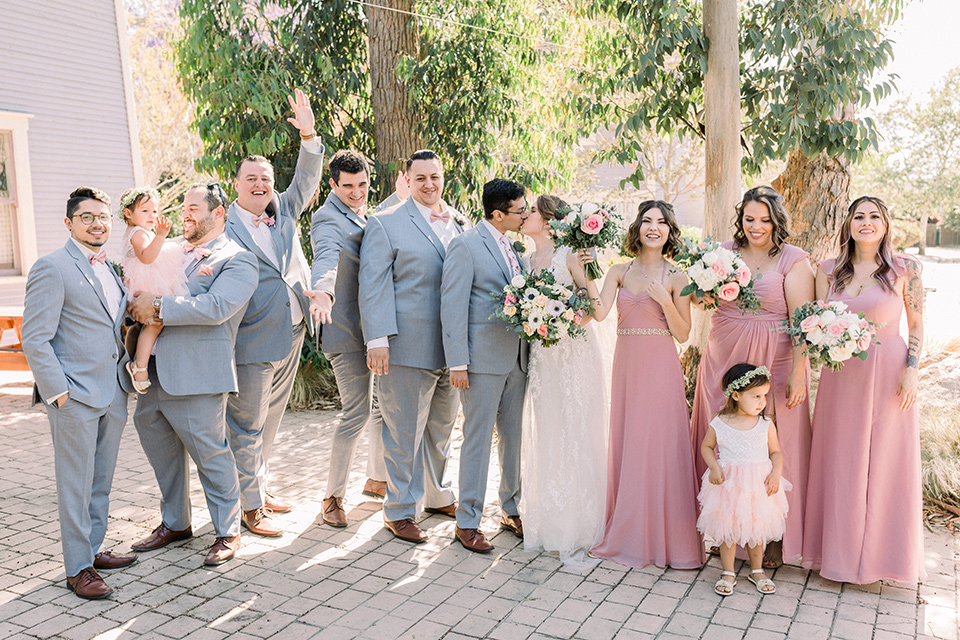
Identical dresses create visual cohesion, while varied shades of the same color add depth and sophistication. Ensure the color is universally flattering or consider offering style options in the same color family.
Groomsmen Coordination
Ground your palette with coordinated groomsmen attire.
If bridesmaids wear blush, groomsmen might wear blush ties or boutonnières against neutral suits. Alternatively, groomsmen can wear the primary color in subtle ways through accessories.


Accessory Choices
Accessories should enhance your color scheme without introducing clashing hues.
- Metallic jewelry in gold, silver, or rose gold complements most monochromatic palettes.
- Shoes can match, contrast subtly, or harmonize with the overall theme.
- Bags, belts, and other details should support rather than distract from your color.
Hair and Makeup Coordination
Hair and makeup should harmonize with your chosen color. For a blush wedding, warm-toned makeup complements the palette. For navy, jewel-tone eye shadows enhance the sophistication. Choose hairstyles and makeup that feel personal while supporting your overall aesthetic.
Catering and Cake Design
Menu Presentation
Coordinate your menu presentation with your color scheme. Use linens, chargers, and serving ware in your chosen color. Even black menus or white plates can work within a monochromatic theme when paired with colored runners, napkins, or place cards.
Wedding Cake Design
Your cake can be simple or elaborate while staying within your palette. An ombré cake that transitions through shades of your color creates a visual statement. Alternatively, a traditional white or cream cake adorned with fresh florals in your chosen color maintains elegance while tying into your theme.
Dessert Table Styling
Create visual variety on your dessert table by offering treats in different textures and shades. Macarons, cookies, chocolates, and candies in your color palette create an Instagram-worthy display. Use varied plating and serving pieces to add dimension.
Cocktails and Beverages
Consider signature cocktails tinted in your chosen color. Drinks with colorful liqueurs, fresh fruit, or edible flowers can tie into your theme. Even simple beverages gain sophistication when served in coordinating glassware or with colored garnishes.
Photography and Videography
How Monochromatic Themes Photograph
Monochromatic weddings photograph beautifully, creating a clean, sophisticated aesthetic that photographs well across all mediums. The cohesion makes images feel intentional and curated.
Creating Visual Movement Without Color Variety
In the absence of multiple colors, photographers rely on contrast, shadow, and texture to create visual movement. Discuss with your photographer how to utilize light and shadow to add dimension to your images.
Maximizing Shadow, Light, and Contrast
Encourage your photographer to capture shots that showcase the interplay of light and shadow within your color scheme. Golden hour photography often beautifully complements monochromatic themes, adding warmth and dimension.
Tips for Your Photographer
Brief your photographer on your monochromatic vision. Ask them to focus on texture, contrast, and emotion rather than color variety. Provide mood boards and Pinterest inspiration to ensure alignment on the aesthetic you’re pursuing.
How to Make It Unique
Adding Metallic Accents
Incorporate gold, silver, or copper accents to add luxury and visual interest.
Metallic linens, chargers, candle holders, or jewelry complement any monochromatic palette while introducing subtle sparkle.
Incorporating Patterns and Textures
Use your chosen color in various patterns—geometric prints, damask, florals, or stripes. Layer different textures through velvet, silk, lace, and metallics to create a rich, dimensional aesthetic.
Personal Touches Within Your Theme
Infuse your personality through personal details. Monogrammed napkins, custom signage, or meaningful décor items in your color create a wedding that feels distinctly yours while maintaining cohesion.
Interactive and Experiential Elements
Consider interactive elements that celebrate your style—a photo booth with single-color props, a signature drink station, or a guest book displayed on a colored backdrop. These touches make your monochromatic theme feel intentional and celebratory.
Budget Benefits of a One-Color Wedding
Streamlined Shopping and Fewer Decisions
Choosing one color eliminates the decision-making process of coordinating multiple hues. You’ll spend less time comparing options and more time perfecting your chosen palette.
Bulk Ordering and Discounts
Ordering large quantities of a single color often results in better pricing from florists, linens companies, and decorators. Vendors may offer discounts for bulk orders of the same item.
Simplified Floral and Décor Options
Focusing on one color allows you to invest in quality over quantity. You can afford premium florals or elegant décor pieces because you’re not spreading your budget across multiple color schemes.
Achieved Elegance on Any Budget
A one-color wedding can feel expensive and luxurious regardless of actual spending. Strategic use of lighting, quality linens, and thoughtful layering create an elevated aesthetic without necessarily increasing costs.
Common Mistakes to Avoid
Going Too Matchy-Matchy
While cohesion is the goal, everything matching exactly can feel flat and uninspired. Vary shades, textures, and finishes to create visual interest and sophistication.
Choosing a Color That Washes You Out
Your wedding photos will feature you prominently. Select a color that complements your skin tone, hair color, and features. Test how you look in your chosen color before committing to an entire wedding around it.
Neglecting the Importance of Lighting
Lighting transforms how your color appears. A beautiful shade can look completely different under various lighting conditions. Always evaluate your color choice in your actual venue under its existing lighting.
Forgetting About Readability and Comfort
While aesthetics matter, ensure your color choice doesn’t compromise readability of signage, menus, or programs. Additionally, consider guest comfort—extremely dark colors in a warm venue might feel oppressive, while very light colors might appear cold.
Ignoring Your Venue’s Existing Colors
Your venue’s existing architecture and colors should complement rather than compete with your chosen palette. If your venue has strong architectural elements, select a color that harmonizes rather than clashes.
Frequently Asked Questions About One-Color Weddings
Can I have a one-color wedding and still include white?
Absolutely. White serves as a neutral base and is technically part of your chosen color’s family (as a tint). White linens, flowers, or accents work beautifully in monochromatic weddings.
What if guests don’t understand my monochromatic theme?
Your monochromatic theme will be evident through wedding invitation suite, photos, décor, and the overall aesthetic. While some guests may not consciously register the intentional color coordination, they’ll subconsciously perceive the elegance and cohesion.
Can I do a one-color wedding with patterns?
Yes, absolutely. Incorporate your chosen color in various patterns—florals, geometrics, damasks, and stripes. Patterns add visual interest and personality while maintaining your monochromatic theme.
Is a one-color wedding limiting?
Not at all. While you’re working within a single color, the variations in shade, texture, and pattern offer tremendous creative potential. Many couples find constraints inspiring rather than limiting.
How do I make my monochromatic wedding feel warm versus cool?
Your color choice naturally creates warm or cool vibes. Blush, gold, and burgundy feel warm, while navy, emerald, and cool grays feel sophisticated and cool. Layer your chosen tone throughout your décor to reinforce the desired atmosphere.
Can a one-color wedding work for casual celebrations?
Absolutely. Monochromatic weddings can range from ultra-formal to casual. The principle of cohesion works regardless of formality level.
What if I’m worried about looking washed out in my chosen color?
Choose a shade specifically selected for your complexion. Consider different tints, shades, and undertones within your color family until you find the perfect match. Your bridal consultant can help identify the most flattering option.
How much does a one-color wedding typically cost?
Monochromatic weddings can range from budget-friendly to luxury, just like any wedding. The advantage is that strategic spending in one color family can create an elevated aesthetic regardless of total budget.
Conclusion
A one-color wedding represents the perfect marriage of simplicity and sophistication. By embracing a single palette and layering varying shades, textures, and finishes, you create a cohesive celebration that photographs beautifully and feels intentional and curated. Whether you choose soft blush, dramatic emerald, timeless navy, or luxe gold, monochromatic weddings work for any size, style, or budget.
The beauty of this approach lies in its flexibility. You’re not locked into matching everything perfectly—instead, you’re given permission to explore creativity within a unified framework. Your personal style, venue, season, and preferences all influence how your one-color wedding ultimately feels.
As you plan your celebration, remember that rules exist to be reimagined. Your monochromatic wedding is an opportunity to make a statement about your taste, values, and vision for your special day. Embrace the constraint, experiment with textures and shades, and trust that cohesion creates its own kind of magic.
Start planning your one-color wedding today, and discover how a single, thoughtfully chosen palette can create an unforgettable celebration of love and commitment.
References
- Wedding Planning and Design
- The Knot – Monochromatic Wedding Trends
- Bride.com – Wedding Color Palette Guides
- Martha Stewart Weddings – Color Coordination Tips
- Fashion and Design Inspiration
- Vogue – Runway Color Trends
- Harper’s Bazaar – Wedding Aesthetics
- Elle Décor – Interior Design Principles
- Florals and Floral Design
- The Florist – Wedding Flower Selection
- Garden Design Magazine – Floral Arrangement Techniques
- Society of American Florists – Professional Standards
- Photography and Lighting
- Digital Photography Review – Lighting and Color
- Wedding Photography Association – Best Practices
- Photo Spot – Composition and Color Theory
- Catering and Cake Design
- Brides Magazine – Wedding Menu Planning
- Cake Journal – Monochromatic Cake Design
- Food Network – Event Catering Trends
- Color Psychology
- Color Psychology Institute – Effects of Color
- Interior Design Psychology – Color in Spaces
- Pantone – Color Trends and Forecasting
Related Post:
Elevate Your Wedding with Personal Wedding Monograms
How to Make Wedding Invitations: DIY Guide & Save $500+
The Ultimate Wedding Planning Checklist
Top Wedding Color Ideas for Spring / Summer Wedding